This article is the first part of a two-part series, aiming to provide a short introduction to the intellectual history and genealogy of Hans Freudenthal’s Lingua Cosmica. This first part aims to describe the many predecessors to Lincos, from the various attempts to create a “philosophical language” in the 17th century to the rise of mathematical logic in the 20th century.
From Eden to England
In the 17th century, English intellectuals in Oxford found themselves thinking a lot about language. They lived in a Europe dominated by a small number of powerful monarchies and republics. Nationalistic sentiments began to arise, which naturally posed a problem: if a British merchant wanted to trade textiles in a Flemish market with a French counterpart, what language should they all speak?
The prestige and power of France in the European chessboard meant that, for a long time, and much to the chagrin of the English, French was seen as the common language of the educated elites all over the continent, essentially being the universal language of diplomacy and court life across Europe. Furthermore, language had been a problem especially for those merchants and navigators who were venturing out to far-off lands to set up what were quickly becoming Europe’s vast colonial empires. Apart from trade, colonial settlement and the exploitation of resources, one major preoccupation for conquistadores, settlers and colonists was introducing (or coercing) Indigenous people to Christianity, which could be quite difficult in the absence of a common tongue.
At this point in time, Latin had been the language of choice of learned men for more than a millennium, but it admittedly had many drawbacks. First, as a dead language, Latin was often cumbersome and difficult to adapt to the new discoveries and concepts introduced by the quick advancements of science. Second, Latin had been long associated with the Catholic Church, which was an obvious problem in the aftermath of the Protestant Reformation. Third, Latin was not a level playing field: Frenchmen, Italians, and Spaniards have a much easier time learning it, while for Englishmen, Dutchmen, and Poles it can be much more of a struggle.
Prominent British philosopher Francis Bacon (1561-1626), in his Novum Organum (1620), argued in favour of a linguistic reform aimed at dissolving the idola fori, i.e. misunderstandings arising from the vagueness and ambiguity associated with common speech. Another significant influence on the British debate was Czech intellectual Jan Amos Komenský (1592-1670), known in English as John Amos Comenius. Comenius had a rather turbulent life: a committed Moravian Protestant, he was forced to go through a journey of exile across much of Europe. During his many travels, he took a keen interest in language and the way languages are taught and learned, dedicating much of his work to these topics. This would lead him to write some of the earliest and most influential textbooks dedicated to the teaching of languages, such as the Janua Linguarum Reserata (“The Door of Languages Unlocked”, 1631) and the Orbis Pictus (“The World Depicted”, 1658, the earliest widely used children’s textbook with pictures). Comenius was a deep believer in the idea that every man should have access to education, and that universal education, especially when it came to language, could be the key for a general reform of society. Comenius’ ambition was especially evident in a text written in 1641, during a visit to London. The Via Lucis Vestigata & Vestiganda (“The Way of Light, Followed and to be Followed”) is an intellectual manifesto describing a utopian society, unified by a perfect universal government managed by a world council, where a universal language, known as Panglossia, is spoken.

Figure 1. Excerpt from an 1882 English language edition of Comenius’ Orbis Pictus (p. 52). Source: Internet Archive.
It is therefore no surprise that it was then, in the mid-16th century, and there, in England, that the notion of a priori philosophical languages was invented. The idea of a “perfect” or “universal” language had been explored before, but it was often characterized as an attempt to rediscover or reconstruct the “original” language, the primeval tongue spoken by Adam and Eve in Eden and by all humans before Babel, from which all other languages descended. Biblical Hebrew, of course, was long seen as the prime candidate for such a role. However, after many decades of investigation, scholars were forced to admit that many languages shared very few or no traits with Hebrew, leading to the conclusion that Adam’s language had been irredeemably lost.
Undeterred, prominent members of the Royal Society fashioned themselves a role as the Adams of the new age: creators of humanity’s new perfect language. Influenced by (their understanding of) Chinese ideograms and Egyptian hieroglyphs, people such as John Wilkins (1614-1672), George Dalgarno (1616-1687) and Francis Lodwick (1619-1694), among others, set out to design their prototypes of the coming universal language. The one thing all their projects had in common is that they would refer to things using what they called real characters – i.e., phonemes and graphemes which would somehow express the essence of the referred thing, describing exactly what it is. If a word is written in a real character, one would always be able to infer its meaning from the structure of the word itself. This is in contrast with natural languages: the English word “dog”, by itself, tells me nothing about what a dog is. The only way to know that the word “dog” refers to dogs is looking it up in a dictionary or have someone else explain it to me. In other words, the fact that the word “dog” is used to refer to dogs is entirely arbitrary. It was believed that a real character, once constructed, would fix this arbitrariness inherent to natural language. In a philosophical language, i.e. a language based on a real character, the word denoting dogs would somehow, entirely by itself and with no need of prior knowledge, communicate to its user and listener sufficient information to understand what a dog is. The idea was thus to create a system in which every conceivable notion could be univocally associated with a word, its real character, and every real character was univocally associated with a notion, in a way that one could always derive the former from the latter and vice versa.
To achieve this goal, every project for a philosophical language of the era had two components:
- A set of signs denoting basic, primitive notions;
- A series of compositional rules which could allow the creation of words and sentences starting from the set of primitive notions.
The first and foremost task was therefore to create, independently from natural languages, a “grammar of ideas”: a system in which all conceivable concepts could be organised and indexed. Usually, such a grammar was organised with a tree-like structure. Taking Wilkins’ Essay towards a Real Character and a Philosophical Language (1668) as our guide, let us say we want to construct a real character for “cat”. First of all we must divide all possible knowledge into primitive notions, which Wilkins, following Aristotelian tradition, called genera. Each genus was assigned a syllable: for example, the syllable Zi was assigned to the genus of beasts (i.e. land-dwelling animals that are not exanguious). All letters denoting beasts, in Wilkins’ philosophical language, thus begin with Zi. Second, the genera were subdivided into numbered lists of differences. Regarding animals, today we may be tempted to use some kind of taxonomical criterion borrowed from evolutionary biology, but no such thing was available in Wilkins’ time.1 The differences within the genus of beasts are thus given by Wilkins as follows:
- Whole-footed beasts (e.g. horses and mules),
- Cloven-footed beasts (e.g. sheep and giraffes),
- Clawed beasts not rapacious (e.g. monkeys and rats),
- Rapacious beasts of the cat-kind (e.g. cats and tigers, but curiously also bears),
- Rapacious beasts of the dog-kind (e.g. dogs and foxes, but also armadillos),
- Oviparous beasts (e.g. crocodiles and serpents).2
Wilkins then used an ordered series of consonants (B, D, G, P, T, C, Z, S, N) to denote each of these differences: in our example (“cat”), a member of the fourth difference is needed, so so the fourth consonant of the series is required. Zip is then the word used to denote all “rapacious beasts of the cat-kind”. Finally, all the species, i.e. individual members, of our differences, were enumerated using another series of letters (this time vowels and diphthongs: α, a, e, i, o, u, y, yi, yu) to denote each one of them. Since the species “cat” appears in fourth place in our list of “rapacious beasts of the cat-kind”, we need the fourth vowel: our desired word for “cat” is thus Zipi.
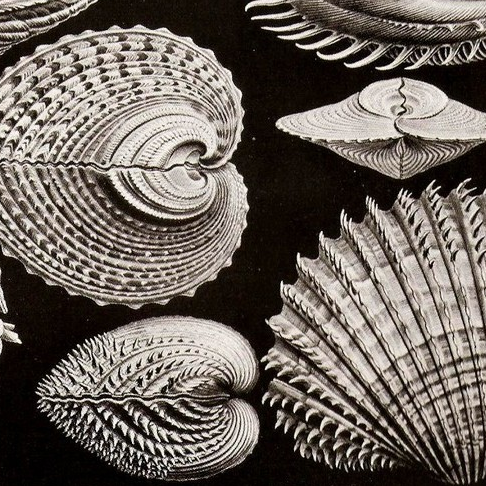
The word itself Zipi is, in essence, a real character, as it contains, embedded within the rules used to create it, a definition of the object it denotes (i.e. cats). Importantly, these are just the Latin-alphabet spellings of Wilkins’ Real Character. Wilkins designed a system of symbols which he used to write his language with, depicted in the header image of this article: rigorously speaking, these symbols are the Real Character, while the words written in Latin alphabet which we used are merely a way to render the Real Character legible by people who understand the Latin alphabet. It should also be noted that the tables included in Wilkins’ work include many elucubrations, definitions and explanations on the criteria used to classify and order entities within this “grammar of ideas”. A speaker of Wilkins’ Universal Language could thus, armed only with the structure of the word itself plus the explanations included in the tables, arrive at an exhaustive3 description of what a cat (or any other thing) is. This is why all such projects are today termed a priori philosophical languages: philosophical implies that the language is the reflection of a system of organisation of thought, and a priori implies that such a language must be constructed without paying any regard as to how natural languages operate.4
Even in this cursory explanation of Wilkins’ system, several problems immediately stand out. First and foremost, how does one identify primitive notions? Wilkins uses “beasts” as a primitive genus, but the choice appears rather arbitrary, especially with the benefit of hindsight. Today we know that “beasts”, defined as “land-dwelling animals that are not exanguious”, is a rather meaningless categorisation from the point of view of the natural sciences. Another system, the one proposed by Francis Lodwick in his book The Groundwork or Foundation Laid (or so Intended) for the Framing of a New Perfect Language and a Universal or Common Writing (1647) interestingly used verbs instead of nouns as the basis for its “grammar of ideas”, but the problem was much the same. Even if one used simple everyday notions like “eating”, “drinking”, or “walking” as primitives, it’s easy to see how these could be further broken down into even more basic notions: walking is the act made by a human moving from a place to another using their legs, so a real character expressing the notion “to walk”, for example, should be made up of the characters for “human” + “movement” + “legs”. But even these could be further broken down: a human could be characterised as a rational animal, in which case a real character for “human” should be made up of the characters for “rationality” + “animal”.5 A possible way out of this problem could be adopting extremely abstract primitive notions, such as “space”, “time”, “mass”, but these would obviously be quite difficult to work with.

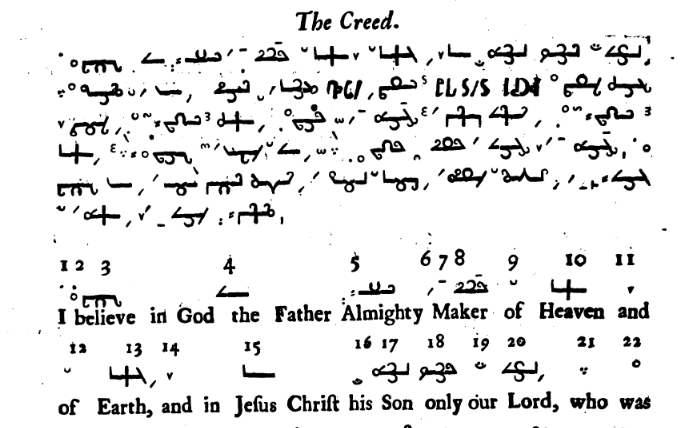
Figure 2. Excerpt from Francis Lodwick’s A Common Writing (1647); the text reproduced here is John 1:1. Source: F. Lodwick, F. Henderson & W. Poole (eds:), On Language, Theology and Utopia, Clarendon Press, Oxford, 2011, p. 87.
Furthermore, how many primitive notions should a language contain? If they were finite, the language was necessarily closed: there was only a finite number of words6 (and thus concepts) which one would be able to create, so new discoveries would have been difficult to account for. At least potentially, such a language should have infinite primitive notions, each of which could have infinite subdivisions depending on them – a rather jarring idea, considering that the new philosophical language is supposed to, among other desiderata, to be easier to master and teach than natural languages. A third and final problem, the isomorphy between sign and meaning implies that any spelling or typing mistake necessarily implies a different meaning. If one reads a sentence such as “King Arthur rode into battle on his white hotse“, the author’s spelling mistake is easily deduced. Conversely, if I were to write “Ziti” instead of “Zipi” in a sentence in Wilkins’ Universal Language (such as “The cat jumped on the table”), the reader would have to find out the meaning of the word by looking at the fourth species in the fifth difference (rapacious beasts of the dog-kind) included within the genus of beasts, and thus inevitably conclude that a jackal jumped on the table.7
Calculemus: The language of mathematics and mathematics as a language
The many problems encountered by Wilkins, Lodwick and their peers induced much scepticism of the possibility, or even desirability, of an universal language, especially one that was constructed “philosophically” and a priori. Nevertheless, many saw a certain merit to the idea, even if in a visionary sense. Wilhelm Gottfried Leibniz (1646-1716) was notoriously fascinated by the idea of what he called a characteristica universalis, a constructed language that could be used to settle disputes and find new discoveries. However, in his writings8, Leibniz moved past the idea of a formal language based on a “grammar of ideas” encapsulating the entirety of sum knowledge of the real world (as Wilkins and others had conceived). Instead, he conceived of his language as a set of formal, logical rules, used to operate on symbols: in other words, a form of logical calculus. In his own words:
“[Once the characteristica universalis has been invented – LDP], when controversies arise, there shall be no greater debate between two philosophers, than there would be between two Calculators. It would only be necessary for them to pick up pens, sit at an abacus, and tell each other: let us calculate [calculemus]. […] Truthfully, it has long been evident to me, as I reflected on the matter, that all human cogitations could be reduced to few primitive ones. If one were to assign characters to these, then one may also form characters of derived notions […] If this were to be done, were one to use such characters in reasoning and writing, they would never make mistakes, and if they did, they would always be able to quickly detect them through an easy examination.”9
Leibniz’s ideas were a first step away from a “philosophical language” capable of solving all the problems riddling natural languages (as Wilkins, Lodwick and others had conceived) and towards a formal language capable of encompassing new discoveriesin a given field of science. To this end, Leibniz argued, the only necessary “primitive concepts” are the ones that are useful in a given field of inquiry. Wilkins and others attempted to create a system of real characters that could linguistically represent the entirety of the world and everything that exists in it, and to do that they needed cumbersome and dubious classification schemes; Leibniz realised that this was unnecessary. In Leibniz’s mind, the characteristica universalis is not a representation of the world as it exists, but a set of formal rules to operate on symbols and check the logical validity of inferences: the primitive elements on which such rules operate may be modified ad libitum depending on the object of study. Leibniz’s hypothesised language is universal not because it encompasses everything that exists, but because, he postulated, the formal rules which ensure the validity of deductions and inferences are always valid, and may always be used to produce true statements from true statements.
It is easy to see why historians of mathematics view the ideas of Leibniz as an essential precursor to the field of mathematical logic and especially to the investigations on the foundations of mathematics, which would characterise the development of mathematics in the 19th and early 20th centuries thanks to the efforts of people like Boole, Frege, Hilbert and Russel. A decisive contribution came from Italian mathematician Giuseppe Peano (1858-1932), who was quite preoccupied with the problem of language, from both a theoretical and a practical point of view: regarding the latter, he famously invented Latino Sine Flexione, a simplified form of Latin which was meant to be used as a lingua franca of scientists and mathematicians.10 However, one of his more famous contributions is the formalisation and axiomatisation of arithmetics presented in his 1889 treatise Arithmetices Principia, Novo Methodo Exposita. What is less known is that Peano had intended his mathematical formalism (which developed into the most widely used notation system used for mathematical logic and arithmetic even to this day) to be the foundation of a new language that could be used for all fields of science:
“Questions pertaining to the foundations of mathematics, which in our times are being studied by many, still lack satisfactory answers. Such difficulties arise, for the most part, from ambiguities of language. […] Using our notation one may express and demonstrate innumerable other propositions [than the ones given in the book], dealing with both rational and irrational numbers. However, should other theories be the object of inquiry, it would be necessary to design new symbols referring to new entities. I believe indeed that the propositions of any science could be expressed through these logical symbols, as long as one adds symbols representing the entities of that science.”11
Peano attempted to succeed where Wilkins had failed12 and to bring about what Leibniz had only conceived of: a true formal language, which, based on mathematics, could be used to algorithmically create new knowledge. While Peano’s work would prove fundamental to further developments in mathematical logic, it remained confined to mathematics, and thus failed in its more ambitious goal: to become a true universal language of science, which could be used to communicate the contents of every field of science to any intelligent listener.

Figure 3. Excerpt from Peano’s Arithmetices Principia (1889) (p. 1). Source: Internet Archive.
A rather narrow problem
While 17th-century natural philosophers were preoccupied with communication to Indigenous people and foreign merchants, scientists of the 19th and 20th centuries wondered about something even more ambitious: communicating with extraterrestrials. Many well known 19th-century proposals involved pictorial means. A dubious and possibly apocryphal anecdote narrates that famous German mathematician Carl Friedrich Gauss (1777-1855) proposed constructing a gigantic representation of the Pythagorean theorem in the Siberian tundra, made to be visible from Mars.13 Finnish mathematician and astronomer Edvard Engelbert Neovius (1832-1888) described a system of mirrors and beacons that could be used to communicate with Martians.14 In 1900, a large prize (the Prix Guzman) was set up by the French Academy of Sciences, to be awarded to any scientist who would achieve successful communication with the inhabitants of another planet, excluding Mars (which was believed to be “too easy”). Apart from the widespread conviction that other planets in the Solar System were inhabited, it was also commonly thought that any communication would somehow be intimately connected with mathematics. Geometry and mathematics were understood to be the hallmark of intelligence as we understand it, and any communication with celestial distant cousins should take place using math as a medium.15
By the late 19th and early 20th centuries, the question of extraterrestrial life had captured the imagination of many in Europe and North America (including early science fiction writers). At the same time, chemists, biologists and other scientists began to keenly investigate the chemical processes underlying biogenesis and the development of life.16 Meanwhile, radio technology advanced at a rapid pace, and by the 1930s and 1940s radio astronomy made its appearance as a scientific discipline. An early “proto-language” for extraterrestrial communication was sketched out in 1952 by British scientist Lancelot Hogben (1895-1975), who, during a lesson at the British Interplanetary Society, described a system of radio communication he called “Astraglossa“, in which “Number [sic] will initially be our common idiom of reciprocal recognition; and astronomy will be the topic of our first factual conversations”.17 In Hogben’s project, numerical units (dashes) and arithmetical operators (flashes) would be combined to form increasingly complicated sentences.

Figure 4. An excerpt of Hogben’s Astraglossa. Source: L. Hogben, Astraglossa or First Steps in Celestial Syntax, in L. Hogben, Science in Authority, George Allen & Unwin, London, 1963, p. 132.
We have now roughly outlined the intellectual genealogy of what may be described as the most ambitious project ever undertaken by a single mathematician: Hans Freudenthal’s Lincos. Lincos was meant to be, in Freudenthal’s own words, a “language for cosmic intercouse”, capable of being used to communicate with any rational being regarding potentially any topic, while satisfying all the usual desiderata of philosophical languages (lack of ambiguity and arbitrariness, ease of learning, etc.). While it is unknown whether Freudenthal was aware of Hogben’s Astraglossa, he certainly was well aware of Peano’s attempt at a “mathematical language”, and sought to build upon it.
“There have been earlier attempts, but Peano was the first to design a linguistic pattern more adequate to mathematical reasoning than common language. Logistic language used and developed consciously the peculiar features of the language of mathematical expressions. […] In spite of Peano’s original idea, logistical language has never been used as a means of communication. If there was something to be communicated, even logisticians kept to the vernacular. Logistical language became a subject-matter.”18
Rather than a tool of investigation for the foundation of mathematics, Freudenthal wanted to create a language that could be used as a means of communication, and designed it around a very specific problem: communication with extraterrestrials.
“After several unsuccessful attempts I finally became convinced that it is just the difficulty of choice which causes the trouble, and that the only thing which matters is to find a starting point. Seeking in history how analogous situations were met, I came to the conclusion that one should start with a concrete, sharply-defined and rather narrow problem. […] After these explanations it will be clear why I think that this problem must be a problem of communication, and more precisely communication ab ovo. My purpose is to design a language that can be understood by a person not acquainted with any of our natural languages or even their syntactic structures. The messages communicated by means of this language will contain not only mathematics, but in principle the whole bulk of our knowledge. […] It was in this way that I arrived at the problem of designing a language for cosmic intercourse.”19
Interestingly, Freudenthal published the first volume of Lincos in 1960, the same year in which, an ocean away, the Green Bank conference heralded the birth of modern day SETI research. Despite this, during the mid-20th century the possibility of extraterrestrial communication appeared more dubious than ever: Martian canals had been exposed as an optical illusion, and new discoveries on the planets of the Solar System made it ever clearer that the prospect of finding intelligent life in our cosmic neighborhood was an unlikely one. Nevertheless, Freudenthal sought to embark on this idea as a grand pedagogical experiment,20 to bring about the same result which Wilkins and many others had sought: a true universal language that could be used to communicate “not only mathematics, but in principle the whole bulk of our knowledge”, in Freudenthal’s own words21 – a monument that would stand over the ruins of Babel. The first volume was meant to be followed by a second one, which was never published, and, as far as we know, never written. Like many other impressive monument projects, Lincos was never brought to completion.22
Lorenzo De Piccoli is a PhD student at the joint PhD program in Philosophy at Università di Pisa and Università degli Studi di Firenze. His research mostly focuses on history of science, especially history of astronomy, and various connected topics.
Header image: J. Wilkins, An Essay Towards a Real Character and a Philosophical Language, SA: Gellibrand & John Martin, London 1668, p. 404.
Edited by Anna Bruins and Mor Lumbroso
Endnotes
- The attentive reader may notice that this is a serious problem: the structure of an a priori philosophical language reflects the structure of the universe in the mind of its creator. Specifically, Wilkins’ own language is based on the sum total knowledge of the world held by a well-educated citizen of England in the 17th-century. The idea that new knowledge would eventually come to supersede their own, or that other people in other cultures could have different ways of describing and classifying objects in the world, did not seem to worry people like Wilkins. ↩︎
- See J. Wilkins, An Essay Towards a Real Character and a Philosophical Language, SA: Gellibrand & John Martin, London 1668, pp. 156-161. ↩︎
- Exhaustive by 17th-century standards: see note 1. ↩︎
- U. Eco (1993), The Search for the Perfect Language, Blackwell Publishers, Cambridge, 1995, p. 221. ↩︎
- Cfr. ibid., p. 265. ↩︎
- It should be noted that systems like the one described by Wilkins do not feature recursion as a way to create new terms (as is generally the case in modern logical languages). This means that the number of words that may be derived from primitive terms is necessarily finite. ↩︎
- Our example is provided in the Latin script, but the same applies in Wilkins’ own symbols: one single writing error easily entirely changes the meaning of a word or a sentence. ↩︎
- Most prominently, De scientia universali seu calculo philosophico, 1680. ↩︎
- G. W. Leibniz (1680),De scientia universali seu calculo philosophico, in K. I. Gerhardt (ed.), Die philosophischen Schriften von Gottfried Wilhelm Leibniz, volume VIII, Weidmann, Berlin, 1875, pp. 200-205. Translation by the author. ↩︎
- Latino sine flexione is technically defined as a constructed international auxiliary language. Esperanto is a much more famous and successful example of such languages. ↩︎
- G. Peano, Arithmetices Principia Novo Methodo Exposita, F.lli Bocca, Turin, 1889, pp. III-V. Translation by the author. ↩︎
- The major difference between Wilkins’s and Peano’s system is that the former requires a “tree of knowledge” built a priori, while the latter does not. Despite this, they share many other characteristics that distinguish both of them from natural languages: in Peano’s formal language, changing a single character may dramatically alter the meaning of a formula. ↩︎
- M. J. Crowe, The Extraterrestrial Life Debate: 1750-1900, Cambridge University Press, Cambridge, 1986, pp. 204-207. ↩︎
- R. Lehti, Edvard Engelbert Neovius, an early proponent of interplanetary communication, in “Acta Astronautica”, vol. 42 num. 10-12, 1998, pp. 727-738. ↩︎
- This thesis survived, alive and well, into the modern day. See for example M. Minsky, Communication with Alien Intelligence, in Edward Regis (ed.), Extraterrestrials: Science and Alien Intelligence, Cambridge University Press, Cambridge, 1985. See this version published on the MIT’s website. ↩︎
- See for example 1908 book Worlds in the Making, by Nobel prize Svante Arrhenius (1859-1927). ↩︎
- L. Hogben, Astraglossa or First Steps in Celestial Syntax, in L. Hogben, Science in Authority, George Allen & Unwin, London, 1963, p. 124. ↩︎
- H. Freudenthal, Lincos. Design of a Language for Cosmic Intercourse, Part I, North-Holland Publishing Company, Amsterdam, 1960, pp. 11-12. ↩︎
- Ibid., pp. 12-14. ↩︎
- For a thorough analysis of the pedagogical background underpinning Lincos, see A. Lentink, The Cosmic Language. A History of Hans Freudenthal’s Lincos, Utrecht University Master’s Thesis, 2025. I would like to warmly thank Ms. Lentink for sharing her excellent thesis. ↩︎
- See the quote immediately preceding. ↩︎
- For a broader history of the history of the attempts of creating and implementing language systems that could be used for extraterrestrial communication, see D. Oberhaus, Extraterrestrial Languages, Cambridge, 2019. ↩︎