
Consent: Een geschiedenis van dwang en vrije wil en alles daartussenin (“A history of force and free will and everything inbetween”), Lannoo, 2025, edited by Chanelle Delameillieure and Jolien Gijbels
The English word “consent” has become a commonly used term in Dutch, with its popularity attributable to the global #MeToo movement. However, that does not mean it did not exist before. Historians from the Netherlands and Belgium demonstrate this in Consent: een geschiedenis van dwang en vrije wil en alles daartussenin. Using examples from the past, they argue for an understanding of “consent” that goes beyond “yes” or “no.” With this theme, the stories grab you by the throat and leave you with more questions than answers.
In Consent, eleven historians from various disciplines examine how consent was understood in the past. The topics they address range from slavery in antiquity to contemporary debates about human remains in museum collections. The focus is largely on Belgium and the Netherlands in modern and contemporary times, with an eye toward the colonial history of both countries. Medical history is strongly represented in this book due to the historians’ specializations. Readers are deeply moved by chapters describing emotional experiences. The stories of children in schools for the deaf who endured abuse, pregnant women forced to undergo life-threatening procedures, and the experiences of parents who gave up their children for adoption, linger in the mind. This review discusses the broader theme of the book and some of these chapters in greater detail.
The social relevance of the publication is clear. The editors of the publication (medievalist Chanelle Delameillieure, and medical historian Jolien Gijbels) situate the topic within relevant events, such as the #MeToo movement that began in 2017 that brought attention to abuses of power in the workplace and society at large. We can also mention the overturning of Roe v. Wade in 2022, which undermined reproductive rights in the United States. In the Netherlands, the recent anti-femicide marches and the campaign “We Claim the Night” are examples of the societal call for a safe future for women. The authors of Consent aim to contribute to a “more profound cultural shift.” They consistently draw connections between the present and the past to find answers to contemporary issues surrounding abuse of power.
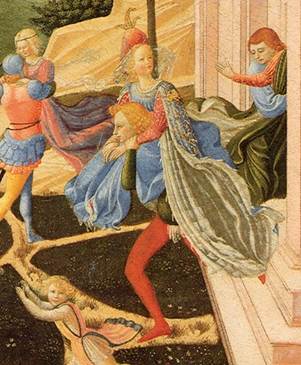
Chanelle Delameillieure does this, for example, in her chapter on abductions (“schakingen”) during the Middle Ages. In such cases of abduction, a woman was kidnapped by a man and forced to marry him. Delameillieure argues that women had more choice in who they married than this well-known image makes us to believe. In the late medieval Low Countries, under canon law, the choice of a marriage partner rested with the two individuals entering the marriage. Delameillieure compares this to the contemporary concept of “enthusiastic consent”, which is now more frequently applied in sexual assault cases. It means there is only consent when it is explicitly stated. She argues that while the system of enthusiastically expressed consent appears in favor of the survivors, it is not foolproof. Drawing from medieval legal sources, she provides examples of women who said “yes” to a marriage on paper, but did not necessarily reflect their own wishes. She fills in the gaps in the sources with her own interpretations of the situations in which women found themselves. By focusing on women’s agencies in the past, Delameillieure offers insights on current legal practices in the Low Countries, and demonstrates the roles of historical research in contributing to social issues.
However, we may well ask ourselves: to what extent can we fill-in the silences in the sources, and use them to draw lessons for the present? For example, how can we know what individuals themselves wanted when power dynamics based on gender, class, and race determined their freedom of choice? Examining consent presents challenges that inevitably arise when we delve into the histories of people in marginalized groups. The editors address the well-known critique by Indian scholar Gayatri Chakravorty Spivak, that historical sources can never provide insight into the thoughts of the oppressed in colonial societies. This is because they are written from the perspective of those in power. The historians of Consent do indeed often rely on sources from authoritative bodies such as government agencies, courts, and medical professionals. Drawing on relevant theories of agency and intersectionality, the historians of Consent strive to account for both the scope for action and personal choices, as well as the influence of unequal power relations – but what stands out most while reading is the powerlessness of oppressed individuals.
In her chapter on schools for the deaf in the Netherlands, educational historian Corrie Tijsseling takes the reader through the experiences and mistreatment of students at these schools. During the 19th and 20th centuries, deaf-mute people were viewed as legally incompetent because they could not verbally express their own will. Their agency was limited, as Tijsseling makes painfully clear. Her chapter highlights the psychiatrists and methods that had a repressive effect on deaf children. However, there are glimpses of the children’s own will in deaf schools. For example, Tijsseling mentions that even though using sign language was forbidden at the schools, children used it to communicate with each other. She also mentions student Bea Visser (1936–2017), who was used as the poster child of a deaf school. She was, however, more than that.
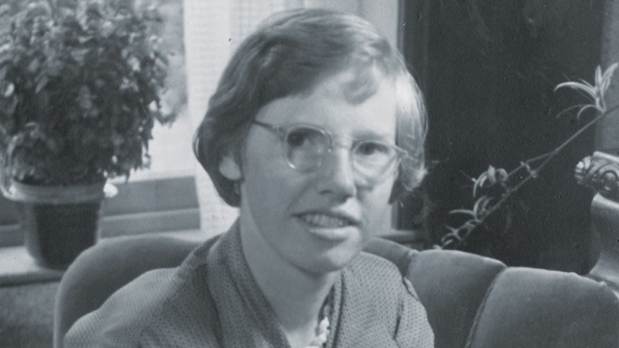
Visser later advocated for the recognition of sign language and founded the organization Roze Gebaar for deaf and hard-of-hearing LGBTQ+ individuals. Tijsseling does not include this in her chapter, but Visser’s activism later in life provides insight into the experiences and agency of students of deaf schools. Putting the focus on individuals like Visser makes us see that people whose range of consent was limited, played an active role in reevaluating the modern-day concept. This shift in perspective – on the deaf person’s life instead of the doctor’s or teacher’s methods – allows for a more fluent concept op consent, which is shaped not only by those in power but by the people living in oppressive environments.
Classical scholar Christian Laes (one of the eleven authors) warns against the risk of becoming a pamphleteer or moralist by constantly emphasizing the agency of the oppressed. For him, historians should primarily seek to understand frameworks of thought, rather than merely demonstrating that people had free will. Yet I see the book as a pamphlet. With their poignant examples, the authors call for a critical reexamination of narratives about consent. After all, patterns of power from the past continue to shape the present. Historian Gerlov van Engelenhoven illustrates this in his chapter on the experiences of the Moluccan community, who perceived their arrival in the Netherlands as a coercive order rather than a free choice – even though the Dutch government does not acknowledge this. The chapter by historians Laurens de Rooy and Lisa Vanderheyden on human remains in museums – which often became part of anatomical collections under conditions of poverty and colonial rule – also raises questions and sparks discussion. How do we deal with the material and immaterial traces of power imbalances of the past?
The variety of examples in Consent indeed shows that consent was understood differently in various contexts, and that not everyone had the same degree of freedom to make choices and express them. The authors did not set out to create a comprehensive overview, but rather to provide a starting point for reflection. They emphasize that consent involves more than just “yes” and “no.” Therefore there is still ample room to further define the history of consent and to fill in the gray areas.
Marit de Wit holds a research master’s degree in Modern and Contemporary History from Utrecht University. Her research focuses on women’s experiences. She is a fellow at the Allard Pierson, where she is conducting research on the dissemination of scientific knowledge in home economics schools. She has previously contributed to research projects in the fields of medical history, colonialism, and emotions. marit.de.wit.17@gmail.com
Edited by Marieke Gelderblom and Bianca Angelien Aban Claveria