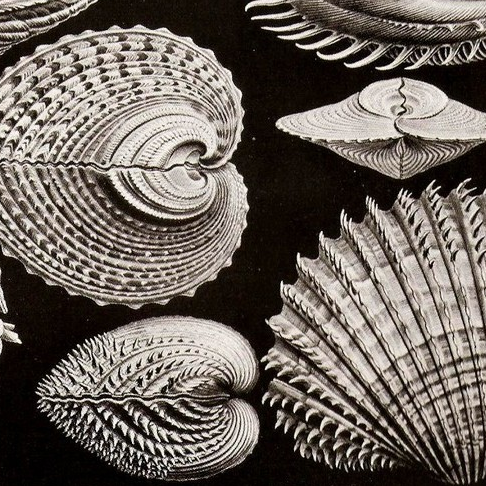
Three academic years ago, a rag tag team of PhD Candidates took up the task of resurrecting Shells & Pebbles. Since then, several have completed their PhDs and graduated to new pursuits, or have nearly completed it, and need to devote the entirety of their brain power to finishing. In their place, we’ve had several new PhD Candidates join our ranks, and this exercise in public history has proven to be sustainable – thanks to the collective efforts of our evolving team* and everyone who has contributed their time and knowledge**!
*If you’re interested to join our team of editors, email us! Master’s students, faculty, and career professionals are also welcome.
**If you’d like to contribute a piece and receive our editorial guidance, email us!
Serving as an editor for Shells & Pebbles is sort of a side-gig for us. We currently hail from universities in the Netherlands, Belgium, and the UK (so far), meeting online twice a month for an hour to discuss processes and divide editing, admin, and social media duties between our team. After we sign-off, we all return to our primary jobs as PhD Candidates, wherein running Shells & Pebbles is but a fraction of what we do.
A PhD is often seen as a monolithic achievement, judged by the product, not the process. The day to day of reaching that goal is a story often untold, misunderstood, or generally unknown to those who haven’t experienced it. In the spirit of signing off for the summer with something more personal, we wanted to share a snippet into a day in our lives as PhD Candidates. And as one would expect, the cute animals that keep us sane will get their time to shine.
Enjoy and have a lovely summer!

David Skogerboe
The Ebb and Flow of it
One thing most people can grasp about life as a PhD Candidate is that it operates in the ebb and flow of the school year. Whether you remember it from your time as a student, or you work(ed) in academia, your workload is largely dictated by starts, stops, and breaks. However, the nature of your work as a PhD Candidate – an independent researcher with a percentage of teaching and departmental duties mixed in – requires strategic usage of this ebb and flow. Leveraging it properly is essential to succeeding in the daunting task of producing a book or edited volume, all on your own initiative, over the course of 4-5 years.
Summer is, of course, the best. But we will return to it at the end.
Things go from chill to hectic literally overnight with the start of the academic year. Here in Utrecht, a new cohort of 20ish HPS Master’s students begin their indoctrination with courses in the History of Knowledge and Philosophy of Science. You try to meet as many of them as you can. Staff meetings, thesis colloquiums, Shells & Pebbles editing, and teaching duties also kick off. This is arguably the least productive period for your own research, as its hard to focus on meaningful work when its peppered in between meetings and teaching.
After a few weeks, things settle into a routine and hum along until the end of the period. Blocking whole mornings or afternoons for your own research becomes essential. These are also the times that you try to make your archival visits. Unearthing interesting finds on the shores of the history of science and the humanities is the best part of the gig. Writing about it is much harder***.
***Shameless plug that we can provide editorial support for any idea, unfinished paper, or repurposing of a Master’s thesis or PhD chapter, and publish it here. Email us and we can figure out how to make it work: theshellsandpebbles@gmail.com
Once the period ends, a flurry of assessments and grading needs to be done and before you know it, the next period begins and a reshuffling of your agenda takes place. It takes a few weeks to settle into the new work/research rhythm. Rince and repeat.
In the Netherlands, period 2 encompasses the entire winter period and people understandably chat about the darkness and melancholy it inspires. However, these winter months are appealing, especially around the holidays, in that you’re incentivized to cozy up inside all gezellig and do research. At the end of the day, your job can be very sedentary and solitary, so sitting inside on a cold day reading is actually nice. You eventually emerge from the gray, and ideally you’ve made some form of incremental progress.
Spring in the Netherlands is the time that hosts nearly all public holidays. Lots of time off. But you come to learn as a PhD that time off isn’t always desired. When you’re expected to produce a book in just a few years, and/or you have a deadline upcoming, you almost wish you had those working days instead. Ideally, you exercise time management skills that allow you to treat your PhD like a M-F 9-5, with evenings and weekends off. But three-day weeks are the precursor to working on the weekend. It’s a hard balance to strike.
The build-up to the end of the academic school year is also a peak period. Annual reporting, grading, course evaluations, planning for the next academic year, consume nearly all of your working hours. Add in your (expected) attendance at a few conferences, and the many hours required to synthesize your research into a 15 minute presentation, and things get busy, quickly. But just like you remember, the imminence of summer motivates you.
Summer is the doldrums. A glorious two month window where your own research can command every working hour, floating about in your own ideas uninterrupted. Mixed in with a lot of time off! Its arguably the best part of working in academia. This coming summer, you (I) have three weeks of vacation planned, and five working weeks with a nearly completely empty calendar. Time to makes some research and writing gains before the logistics of the school year slows you down again!

Bianca Angelien Aban Claveria
Stayin’ Alive
INT. BIANCA’S ROOM. FRIDAY. LATE AFTERNOON.
The bright orange rays of the Sun piercing the windows. A gentle summer breeze filling the air with the contagious laughter of carefree children living next door, and the scent of freshly mowed grass. Bianca is sitting in front of her work set-up, her laptop dry heaving because of the multiple open tabs, programs, and documents, all running at the same time. Her 5th cup of coffee for the day has already gone cold. She looks up from her desk, and notices that her microwave clock reads 18:00.
Bianca leans back in her chair, stretching her legs as far as they could go. She slowly closes her eyes, and a grayish-toned reel of the day’s events begins playing in her mind.
EXT. LEIDEN UNIVERSITY. FRIDAY. 8 HOURS BEFORE. LATE MORNING.
Bianca goes down at her bus stop, and takes her time walking towards her office at the Institute for History. While waiting for her turn to cross the street, she browses through her Spotify playlist. “Decisions, decisions, decisions.” She mutters under her breath. Her mind is as full as her to-do list for the day. But at that very moment, she was torn with a battle of music playlists. She eventually chooses “70s Party”, and the iconic tunes of Bee Gees’ Stayin’ Alive fills her ears.
The pedestrian signal blinks from red to green.
“Ah, ha, ha, ha, stayin’ alive, stayin’ alive.” Bianca sings to herself, as she groovily crosses the street.
John Travolta would’ve been proud.
INT. INSTITUTE FOR HISTORY. FRIDAY. 12 NOON.
After a series of morning meetings, and much needed catching up with colleagues by the watering hole (also known as the coffee machine), Bianca settles in front of her desk. The high-pitched “kaw-kaws” of seagulls flying outside, were seamlessly mixing with the “clickety-clacks” of the desktop keyboards inside the office. Bianca just finished a supervision meeting about a dissertation chapter she has been working on for a couple of weeks. She twirls a ballpen between her fingers, as she reviews her chapter outline and considers the revisions that needs to be done. “Decisions, decisions, decisions.” She mutters under her breath.
“Ping!” goes the Outlook reminder, jolting Bianca from her thoughts. Another meeting in 15 minutes. She also realizes that there are still a couple of unanswered emails, and a long to-do list with unchecked boxes. A slide deck for an upcoming conference still needs images, a blog piece demands another round of proofreading, and a set of library books that have to be returned.
To help gather her bearings, Bianca heads out to get her 3rd cup of coffee for the day. “Brrr…whrrr….gurgle, gurgle…” goes the coffee machine. But in Bianca’s ears, the soothing voices of the Brothers Gibbs continue to gently assure her: “Ah, ha, ha, ha, stayin’ alive, stayin’ alive.” And she nods in agreement. She decides to move other tasks to another day.
INT. BIANCA’S ROOM. FRIDAY. LATE AFTERNOON. AGAIN. Bianca slowly opens her eyes, abruptly cutting the reel that was playing in her mind. The day was coming to a close, and her to-do list remains unchecked. But she is reminded, that it’s okay to pace yourself. It’s okay to rest. She smiles, and gives a satisfied sigh of relief. She looks up from her desk, and notices that her microwave clock reads 18:01. “Ah, ha, ha, ha, stayin’ alive, stayin’ alive.” Bianca sings softly, as she decides what to have for dinner.

Anna Bruins
Subito piano
Doing a PhD is hot. 34 degrees Celsius, to be exact. In a country that claims to suffer from ‘extreme weather conditions’ as soon as there are more than two consecutive hours of sunshine, the actual blistering heat the United Kingdom has been experiencing the past few days has shut the whole country down. Trains, buses, Prime Ministers – all barely functioning under regular circumstances – now have completely seized their operations. The only things still running are the sweat drops from our faces, and my Zotero. A loyal companion in my home away from home.
Earlier this week, I chose to ignore the temperature, embarking on my hour-long cycle ride to the University of Warwick campus. In the UK, when people hear you cycle to work, they usually assume you are either insanely fit or, well, insane. If you are a woman, they also call you ‘brave’. So, on my way to campus for a workshop I’ve helped organise, I wear a dorky helmet and a pair of heels. It’s the migrant’s fusion of Dutch convenience and British road (un)safety precautions, somehow resulting in a twisted sort of feminist statement.
The workshop marked the end of a short but intense conference season. Today, I woke up with the realisation that all my marking has been done; all my presentations have been given; and, with the odd exception, all events have been attended. Amid this rare moment of tranquillity, I call my supervisors for our scheduled meeting. It seems that all that is left for me to do now, is what they hired me to do: research. My mind goes a-spinning. Archival trips, chapter divisions, article submissions – now that summer has come, it is time to get to work!
My housemate. My partner. And I. In the coldest room of our house, we gather. All of us PhD candidates, quietly fighting our own battles. Yesterday, my housemate nearly suffered a heatstroke while reading a book on the capitalist construction of the elderly. My partner barely made it back alive from the Cambridge archives, with British public transportation breaking under extreme temperatures and even more extreme privatisation. But today, the tables have turned. The click-clacking of our keyboards, the suppressed sighs of intellectual strain, and the ice gently melting in our waters is the kind of bliss I will look back on with fondness when I am old and grey, living on a non-existent pension in the post-apocalypse. As I scoop my home-made sorbet, the day slowly comes to an end. All quiet in the West Midlands.

Elian Schure
An afternoon in June at Utrecht Science Park with Elian
Buys Ballot building, third floor
In the life of a PhD, there are few certainties. Contracts are temporary, supervisors can be fickle, and your writing skills seem to shift on a daily basis. However, one of the absolute certainties in my PhD life is that my office in the Buys Ballot Building is never truly at a comfortable temperature.
Another uncertainty is that you never know who will join you in the office on any particular day. Colleagues are always walking in and out of the office for research, holidays, and papadagen. For the last few days, I have shared the office with my coworker who is bravely finishing her PhD. While I am panic writing my first solo authored paper (please send prayers and postcards), the clanking of our keyboards is usually the only sound heard in our office. Occasionally, the silence is broken by some murmurings about archival research into the history of mathematics education or the consequences of depletion narratives in gut microbiome research.
As we are quietly typing away, I notice a small ladybird walking their way up my arm. This temporarily makes me confused. One of the reasons why this concrete block (Building Formerly Known as Buys Ballot Building) is uncomfortable temperature-wise is that the windows do not open. The ladybird could not have flown in through the window.
For a second, I consider the option that my office mate turned into a ladybird (Kafka warned us, y’all), but the continuous typing noise of her keyboard disproves this. The ladybird must have landed on me while I was going for a walk and simply accepted the ride into my office. While I offer the desk next to me to my new, red/black office mate, I wonder what the gut microbial composition of ladybirds is like.

Marieke Gelderblom
‘Time for coffee?’
As usual, it is the first thing I hear when I walk into our shared office. With the freshly brewed cup of filter coffee in hand, I answer a few e-mails (the room I booked for an exam next week has been changed, and the book I requested is ready to collect from the library). Then I open the Word file of the chapter I’m currently working on. It is time to work on section 3.1 and editing is scheduled for tomorrow, so today I can just ramble on. As I work, I check photographs from a recent trip to the archive. I almost find what I’m looking for, but close inspection reveals I’ll have to return and look again. Usually, my archive visits are fun for me but less fun for the personnel. I never know where I’ll find a statistical graphic, and not only a statistical table, so I usually request quite a lot of material, only to browse through and quickly conclude that statistical graphics are nowhere to be found. At the end of these visits, I usually hear myself saying, ‘Oops, my sincere apologies for finding all that material from the shelves.’
At 12:00 sharp it is time for lunch. Then I have to teach. Today’s topic is the mathematics behind AI, and together with the first-year students I discuss how vectors and conditional probability play a role in language models. We end with a conversation about the societal and ecological impact of these calculations. After the adrenaline of teaching, I spend the last part of the afternoon trying to solve some Zotero issues. Unfortunately I do not get it to work, and I go to get a cup of tea with my colleagues. Complaining helps, and the pictures of their pets do too. I cycle home, thinking it was a good day.
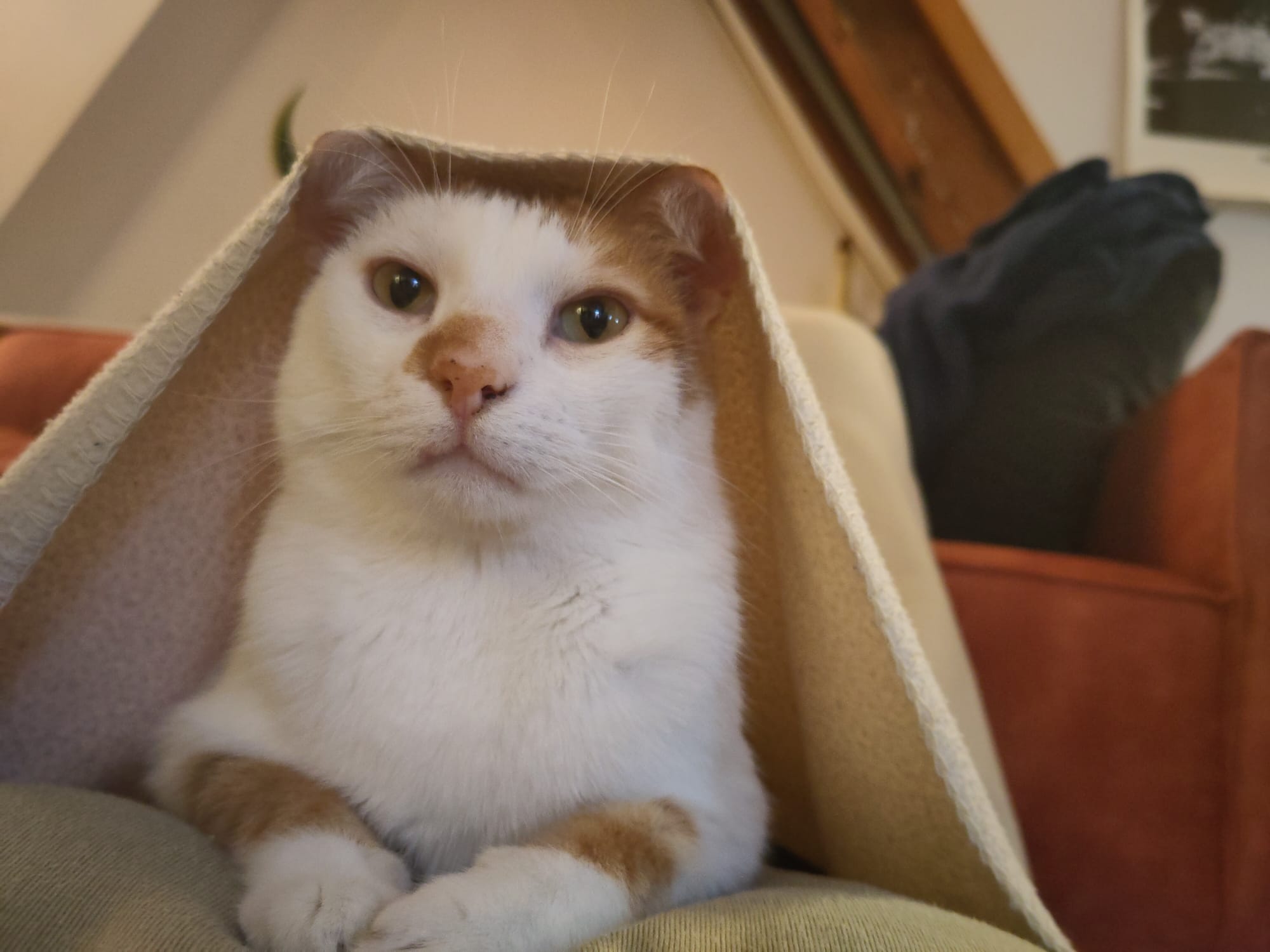
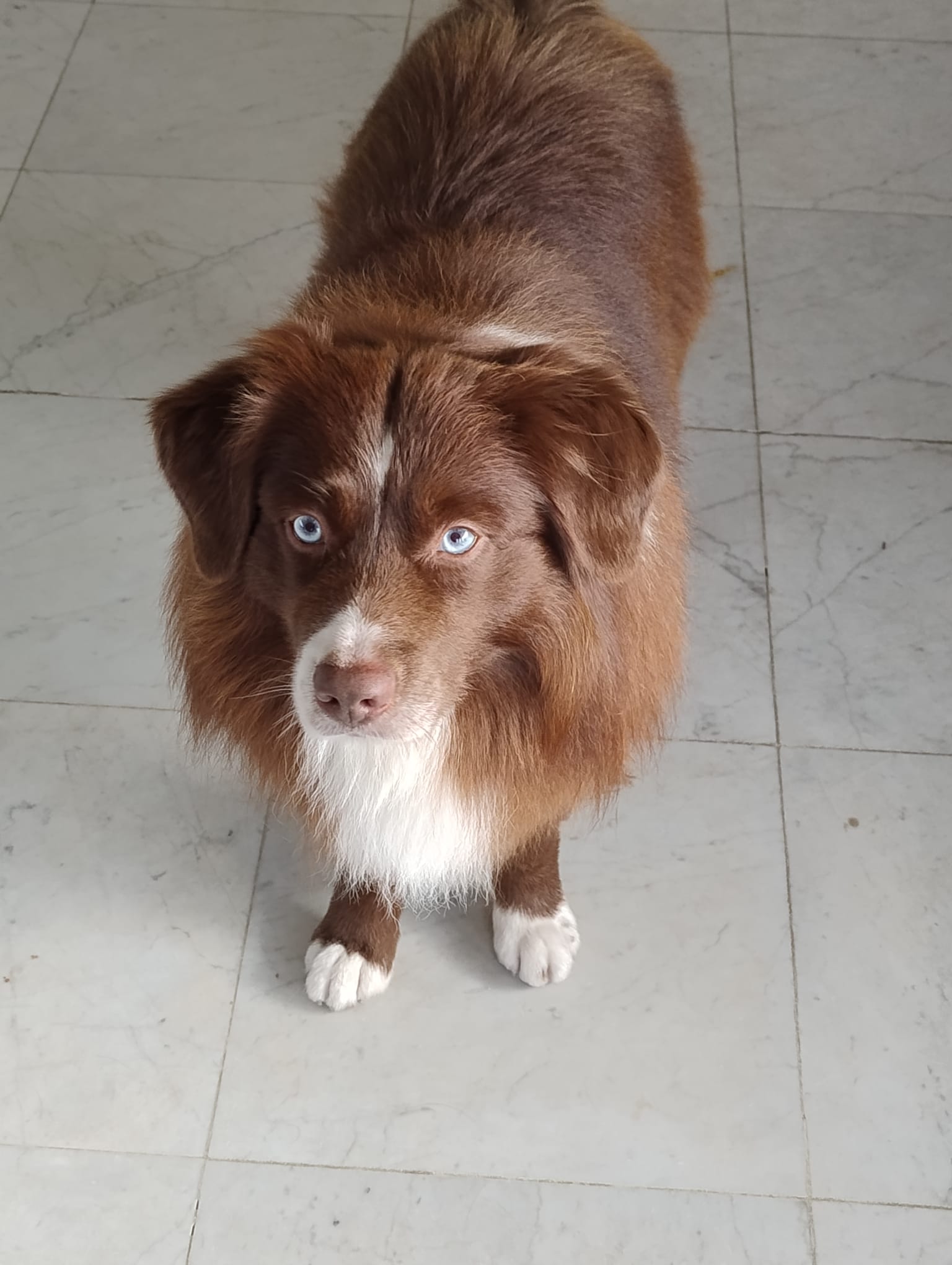
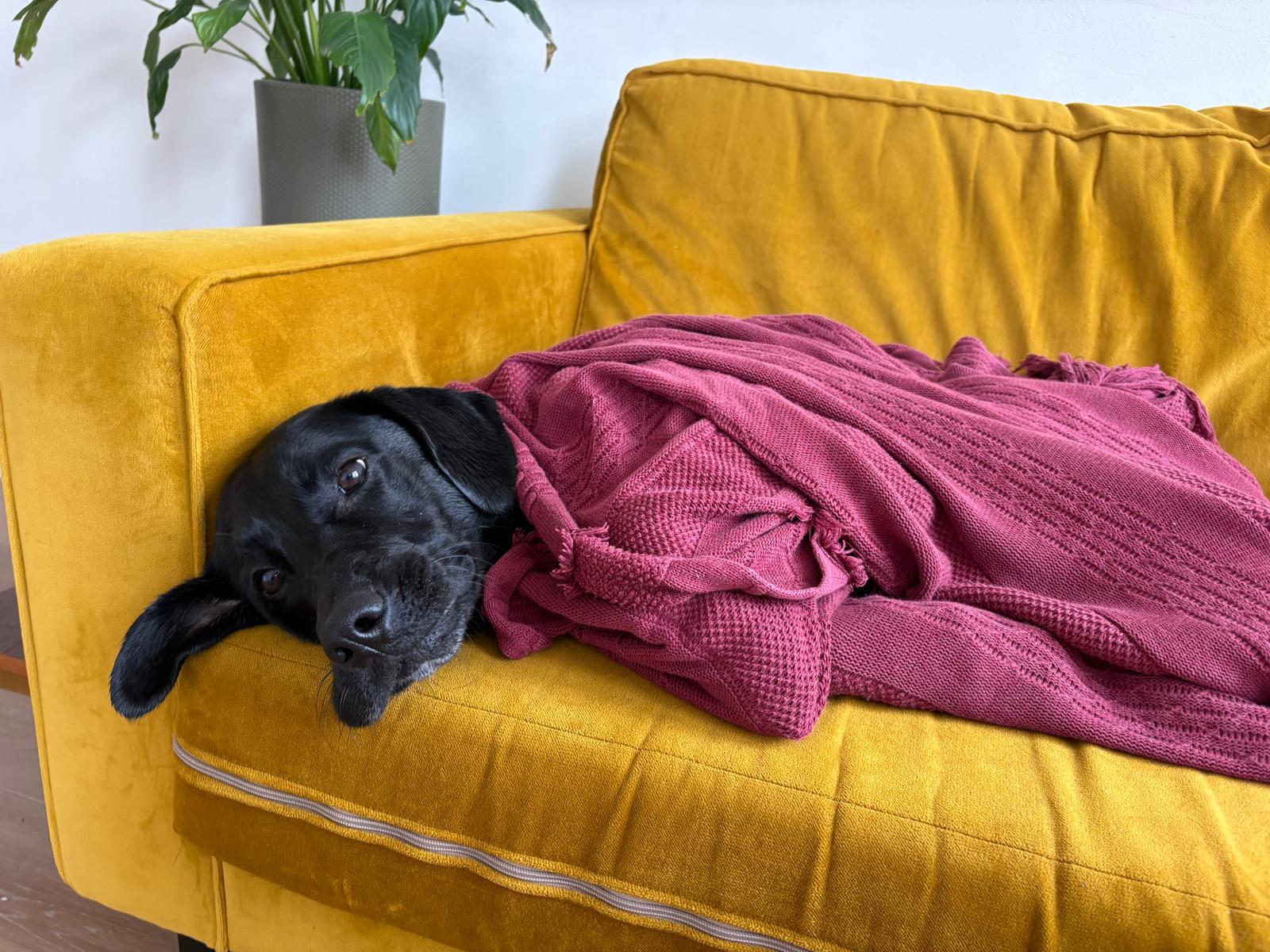
So just in case you might read this on a day where you also could use some encouraging pet photos, here’s a little gallery:


Otto (Anna)