In 1900, Gustav Klimt (1862-1918) completed Philosophy, one of a trio of murals that, along with a contribution from Franz Matsch (1861-1942), had been commissioned to adorn the ceiling of the University of Vienna’s Great Hall (see figure 1).1 The given theme for the entire set of murals (each over four meters in height) was “the triumph of light over darkness.”2 While Philosophy won gold at a separate event (the Grand Prix at the Paris World Fair in 1900), the mural was scandalously received by the Ministry of Education in Vienna, the body who had commissioned the project. The ministry rejected the piece, citing Klimt’s portrayal of “unclear ideas through unclear forms” and his move away from classicist style towards symbolism.3 Down the left-hand side of the mural tumbles a series of entangled nude bodies from birth through death; the right-hand side comprises a pixilated, atomic universe from which the eerie outline of the sphinx emerges, a signal of wisdom and power but also the danger of knowledge. At the bottom of the frame lurks a shrouded figure of knowledge, eyeing the viewer. For the ministry, Philosophy was a rejection of the kind of enlightenment legacies of reason and rationalism the university had hoped to pedestal.4 For critics, Philosophy was a “pornographic” and “perverted excess.”5 As such, the mural (and its siblings) had political and professional consequences. Klimt’s professorship at the Academy of Fine Arts was not renewed, and the Vienna Secession movement, for which Klimt was president, lost the support of the state.
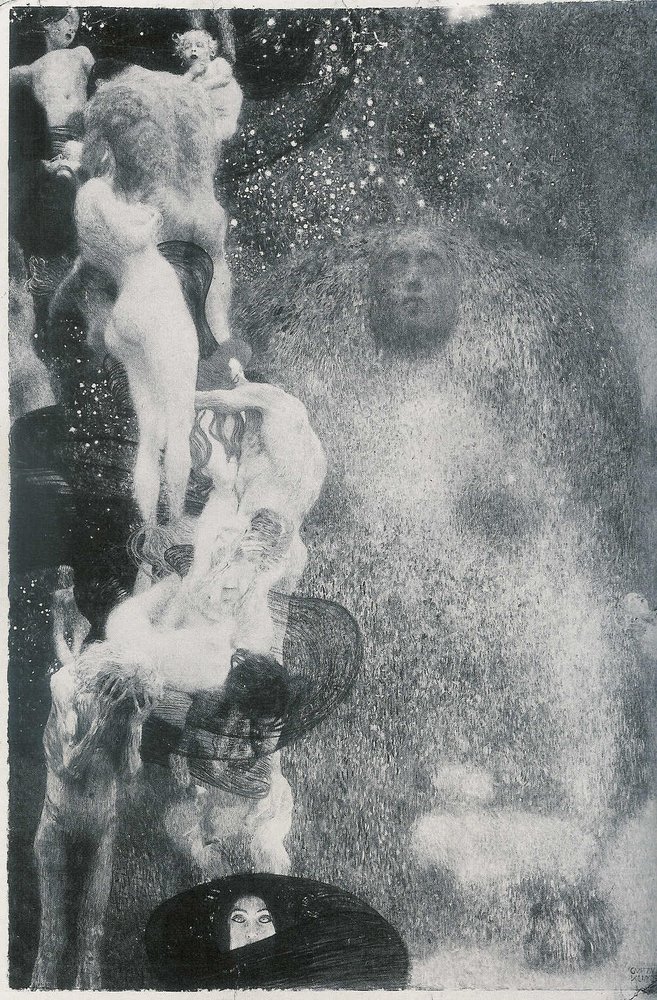
Figure 1. Gustav Klimt, Philosophy, 1900-1907, oil on canvas, 430 x 300 cm, (Destroyed) University of Vienna Ceiling Paintings, Photograph at the Archive of the University of Vienna.
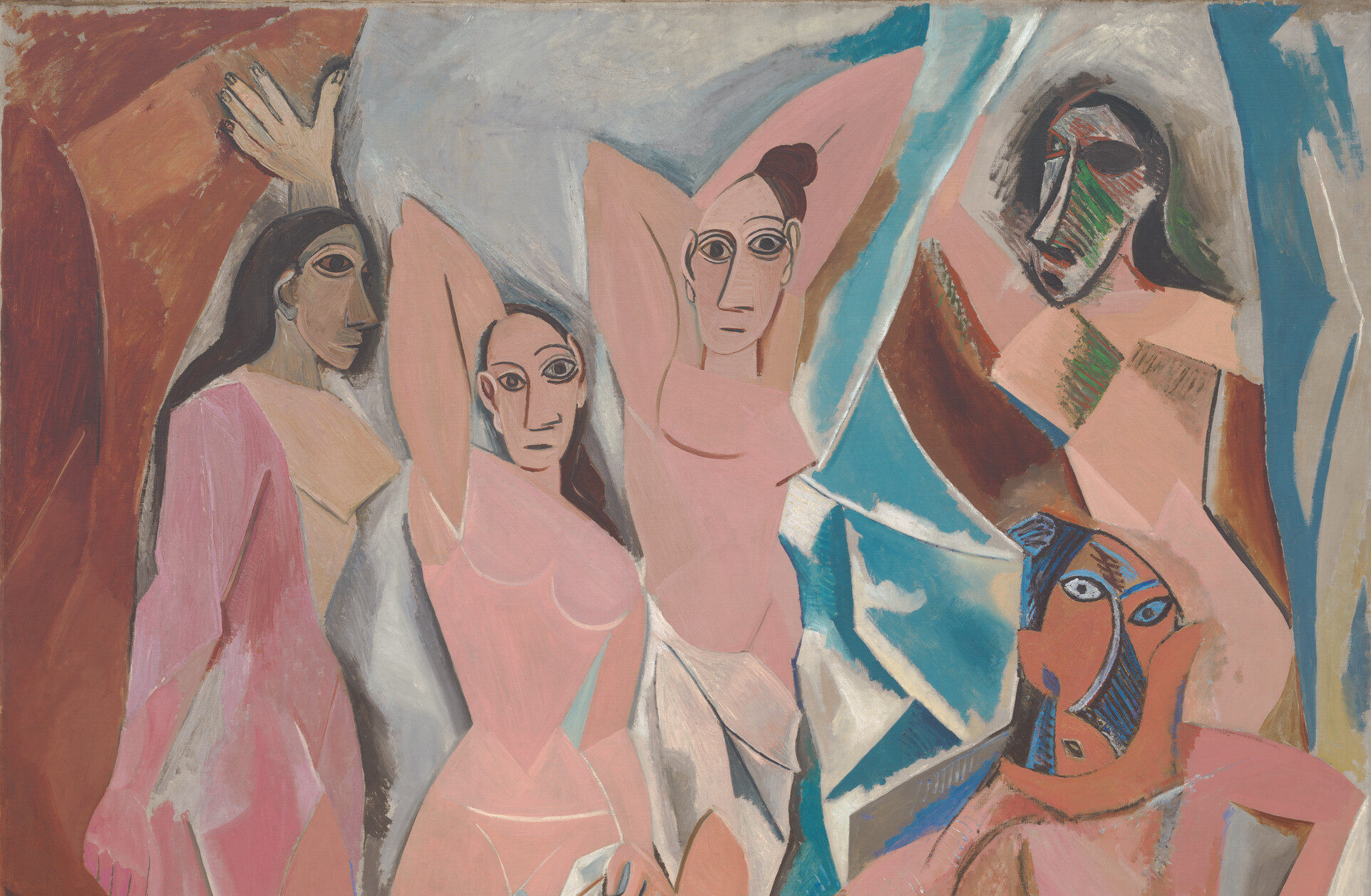
Several years later in 1907, Pablo Picasso (1881-1973) finished Les Demoiselles d’Avignon at his live-in studio in Montmartre, Paris (see figure 2).Oft-cited as “the first Cubist picture,” the painting did not publicly debut until 1916 at the Salon d’Antin.6 The oil on canvas (measuring 243.9 by 233.7 cm) depicts the gathering of five women of differing ethnic backgrounds, four of whom gaze directly at the viewer, and one who enters through a curtain and remains aloof. The latter instead gazes across the painting from left to right. The postures of the women deviate and yet align through the translation of their bodies into juxtaposing angular planes; a triangular table bearing fruit disturbs their formation at the bottom center. Critics labeled Les Demoiselles “immoral.” Artist Henri Matisse (1862-1942) considered the work to be a hoax, and artist André Derain (1880-1954) noted of the painting, “[o]ne day we shall find Pablo has hanged himself behind his great canvas.”7 For his part, Picasso rarely offered comment on the work, and as historian Mary Mathews Gedo reports, “actively sabotaged attempts to reconstruct the exact history of the canvas.”8

Figure 2. Pablo Picasso, Les Demoiselles d’Avignon, 1906-1907, oil on canvas, 243.9 x 233.7 cm (The Museum of Modern Art, New York; photo: Steven Zucker, CC BY-NC-SA 2.0) ©️ Estate of Pablo Picasso.
Klimt’s Philosophy and Picasso’s Les Demoiselles thus vary widely in temperament, style, size, place of origin, and almost any other metric one might imagine. Nonetheless, the pieces share space in the historical imagination, famous for both the original controversies they ignited, and for their afterlives as harbingers of Modernist aesthetics. As I will argue in this essay, these two paintings can also be read together as expressions of the “age of uncertainty”: the latter decades of the nineteenth century and the early decades of the twentieth. Different fields of study have taken note of the particularities of this period. Art historian Roger Shattuck used the French phrase “Le belle epoque” or “The Banquet Years” to describe the emergence of playful avant-garde aesthetics that fermented before the events of the First World War tipped the category towards more sinister variants, such as Dadaism.9 Indeed, in part due to the changes underway with the advent of technologies designed to both destroy and rebuild soldiers’ bodies, scholars of embodiment have also described the era as “the age of catastrophe.”10 The era was also associated with what scholars of all stripes have long described as “modernity,” which, whether positively or negatively appraised, has generated a robust literature. Here, scholars have flagged changes in the pace of industrialization, the extent of globalization, the intensity of urbanization, and shifts in governance and social ordering, among others.11 Historians of science, particularly those tracking the history of statistics, such as philosopher of science Ian Hacking, have dubbed the era “the age of uncertainty.”12 Hacking has observed that the absolutism of the enlightenment, in which a singular value was often perceived to be accurate, gave way to the rhetoric, tools, and knowledge products associated with probabilities: the most accurate answer increasingly became consistent with a probable range of values rather than a single entity. For Hacking, this shift had to do with a rise in statistical ways of thinking and reasoning.
Thinking with probabilities and statistics has a deep history, but statistical styles of reasoning took on new significance over the course of the nineteenth century. Prompted by the “avalanche of numbers,” statistical styles of reasoning transformed not only the sciences and medicine, but various other fields of study, including social sciences, government bureaucracy, military practices, and corporate ventures, such as garment manufacture and insurance suppliers.13 Awash in the heaps of numerical data that continued to pour in through industries, the sciences, medicinal probing, and bureaucratic devices, statistical tools were deployed to mine data, erect categories, and divine the future. Hacking has argued that the use of statistical tools to “tame chance” commenced with the “erosion of determinism,” in which the deterministic, absolute values of enlightenment rationality were replaced with truth-making grounded in probability.14 As the age of uncertainty, fin-de-siècle Europe saw statistics become “the philosophical success story,” prompting shifts in epistemology, logic, metaphysics, and ethics.15 Given the powerful ways that statistics intersected with such a diverse array of fields, it is strange that, apart from histories of data visualization, less attention has been paid to the entanglements between statistical ways of seeing and fields of aesthetics.16 An engagement with Philosophy and Les Demoiselles offers an experiment in that vein.
Knowledge and Embodiment in the Age of Uncertainty
In the most general sense, both paintings lend visuality to the age of uncertainty and attendant erosion of determinism. With regards to Philosophy, while historian Carl E. Schorske argued that the paintingrepresented a “crisis of rationalism” (thus echoing Klimt’s contemporary critics), historian Deborah R. Coen has suggested that Philosophy instead represents a shift in the category of rationalism itself: with the erosion of determinism, claims of rational truth-making came to be built on probability rather absolutisms.17 Rejecting the enlightenment-era assumptions that the world could be universally known with certainty, Klimt depicted what he described as a “viscous void” out of which emerges the sphinx to warn against taking any such claims about knowledge for granted. German physicist Werner Heisenberg’s (1901-1976) aptly named “uncertainty principle” from 1927 serves as the prime exemplar of this shift in reason: either one can know the location of a particle in space or one can know the velocity of that particle, but one cannot know both. In the age of uncertainty, as Heisenberg’s principle makes clear, knowledge has bounds.
Less obviously, Picasso’s Les Demoiselles also protests enlightenment traditions of truth-making. In particular, the painting challenges the Cartesian divide that elevated the rational mind above the irrational body, an interpretation that becomes visible in the historical layers of the painting’s creation. In Picasso’s numerous studies for Les Demoiselles, the five women are joined by two men (see figure 3 for an example). The first was a sailor positioned in the center of the action; there, he gambles, eats fruit, and engages with the women. While all that remains of this detail in the final version is the table bearing fruit, critics have interpreted the underlying presence of the sailor as symbolizing the vices of the flesh.18 As for virtue, in what now lingers as the fifth, aloof woman drawing back the curtain, was originally a man carrying a skull. For some critics, the inclusion of a skull signaled a momento mori and the virtue that accompanies the contemplation of death. But as art historian Leo Steinberg pointed out, when pressed on the matter, Picasso revealed to the curator of the Museum of Modern Art William Rubin in 1972, that the man with the skull was intended to be a “medical student.”19 For Steinberg, then, the skull did not represent a contemplation of death because a medical student is the only kind of person for whom a skull does not represent death, but rather is an object of scientific inquiry. From that perspective, Steinberg argues that the medical student symbolizes a particular brand of non-participatory knowledge production. With his non-directional gaze and drawing back of the curtain, the medical student represents the removed, analytic view of bodies which stands in contrast to the participation of the sailor who celebrates the materiality of bodies. Steinberg’s reading gains further traction when considering Picasso’s original title for the painting, Le Bordel philosophique, or The Philosophical Brothel. However, historian Suzanne Preston Blier considers a more apt translation of the title to be “The Philosophical Mess,” as “le bordel” more commonly refers to a “mess” or to a “complex situation” rather than to sex work.20 While Picasso’s contemporaries discouraged this title in favor of Les Demoiselles, Picasso continued to call the painting “my brothel” throughout his life.21 The table thus turns. From the perspective of the man with the skull, Les Demoiselles is not a critique of the flesh but a critique of a mode of knowledge production that purports to have removed the materiality of the body and elevated the reason of the mind to achieve what Lorraine Daston and Peter Galison describe as “mechanical objectivity” and what Donna Haraway describes as the “disembodied view from nowhere.”22
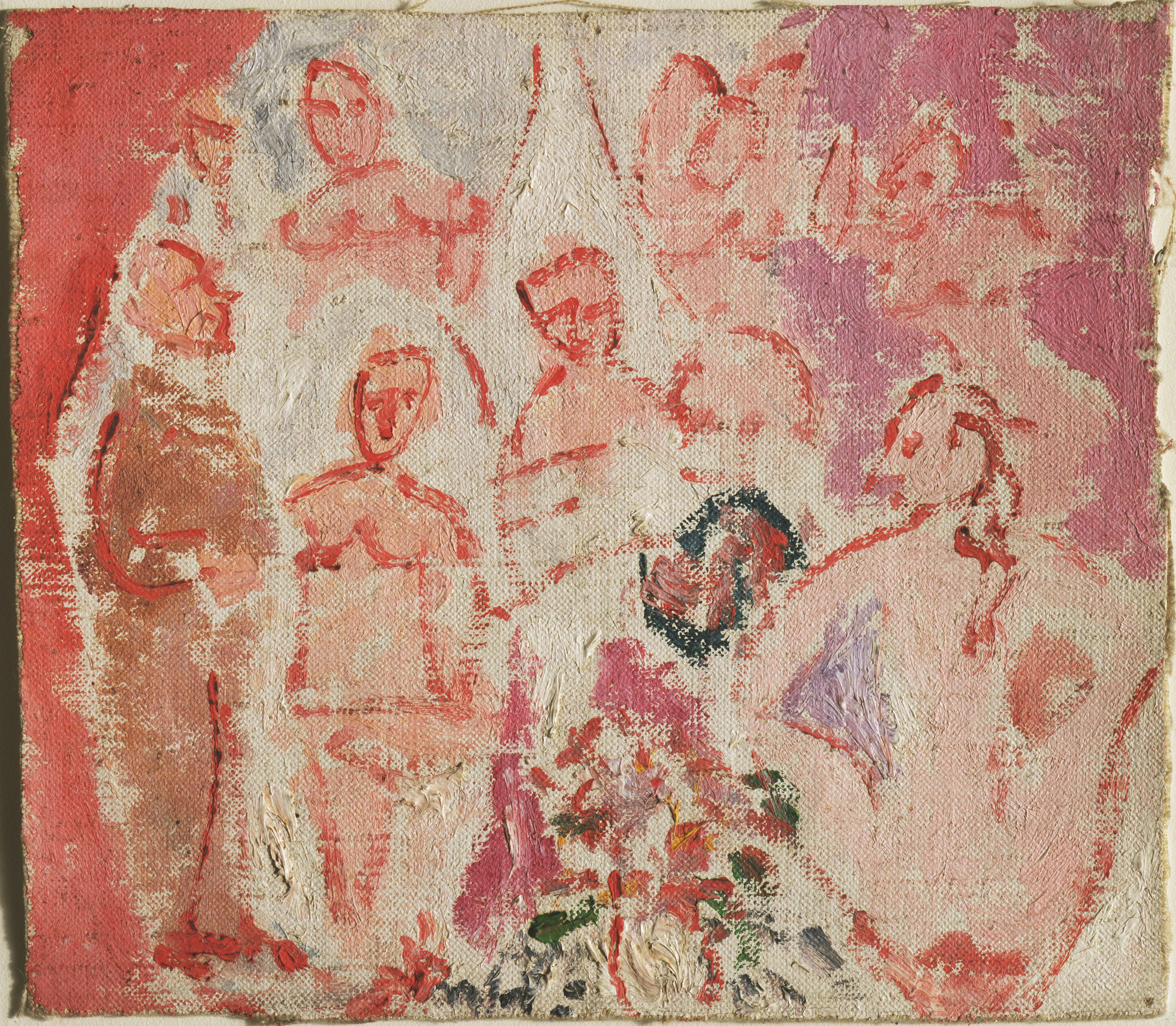
Figure 3. Pablo Picasso, Study for Les Demoiselles D’Avignon, 1907, oil on cavas, 18.5 x 20.3 cm (The Museum of Modern Art, New York) ©️ Estate of Pablo Picasso.
In this way, Philosophy and Les Demoiselles offer visions from the age of uncertainty, glimpses into changing conceptions of truth-making. These paintings challenge the assumption that universal knowledge is possible, and the assumption that the way to access such universal knowledge involves the denial of the material body in favor of the reasoned mind. Indeed, central to both paintings (and their respective controversies) are the particular ways in which bodies are depicted. Both paintings present a series of nude bodies, earning them labels such as “pornographic” and “immoral.” For Philosophy, Klimt arranged the bodies vertically according to the life course, or what he described as the “beginning of life, fruition, decay.”23 A common trope for Klimt, the life course also appears not only in one of Philosophy’s siblings intended for the University of Vienna, Medicine (1901), but in various other works, including Hope I (1903), The Three Ages of Woman (1905), and Death and Life (1908-1915) (see figures 4-6). Taken together, Klimt’s consistent use of the life course evidences his interest in the “chain of being.” When viewed from the age of uncertainty and its attendant rise of statistical styles of reasoning, Klimt’s repeated depiction of the stages of life invites the viewer to query how the very categories of the life course were transformed in fin-de-siècle Europe. In the age of uncertainty, bodies were increasingly known through their statistical dissections and corresponding demographics, including those of gender, ethnicity, ability, and age. In many ways, modern age categories were forged in the standardizing of the work force that accompanied the use of regimes such as Taylorism, which removed people perceived as disabled, ill, too young, or too old from the capitalist lines of production.24 The standardization of the work force was further ossified with the introduction of national pension and insurance schemes, first initiated in Otto von Bismarck’s Germany in 1884.25 The crystallization of statistically known (and increasingly standardized) lives and bodies made the stages of the life course visible in new ways that are detectable not only in nineteenth century insurance policies, census procedures, and the construction of new relations between governments and their citizens (or what Michel Foucault termed “biopolitics”). The modern categories of the life course are also detectable in the ways that artists such as Klimt depicted and arranged human life.
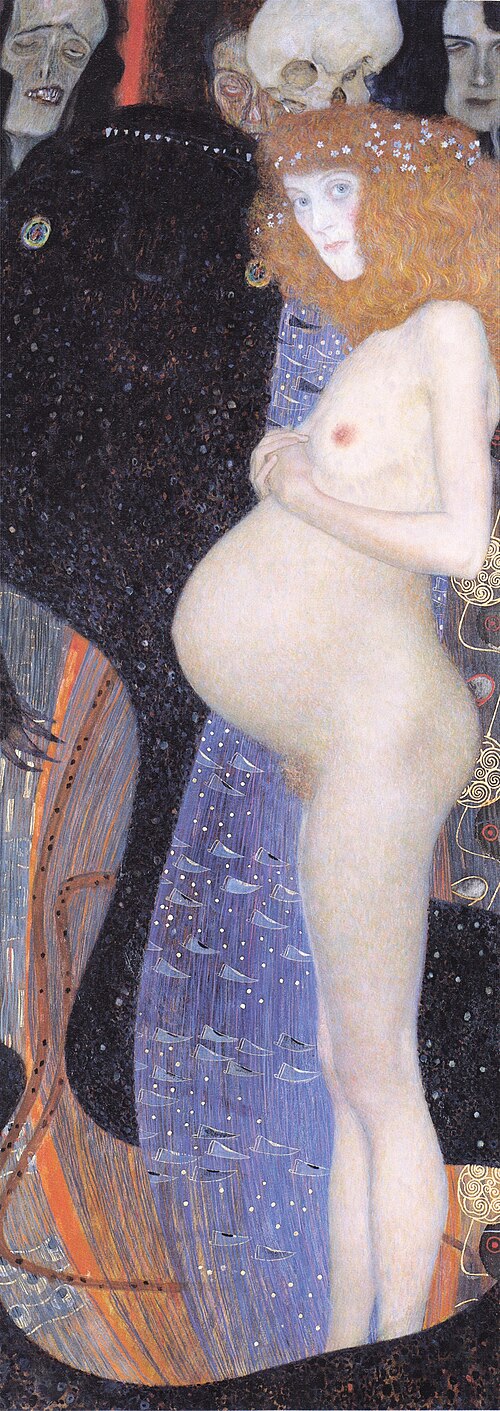
Figure 4. Gustav Klimt, Hope 1, 1902-1903, oil on canvas, 189.2 x 67 cm, National Gallery of Canada Ottawa.

Figure 5. Gustav Klimt, The Three Ages of Woman, 1905, 173 x 171 cm, Galleria Nazionale d’Arte Moderna, Rome.
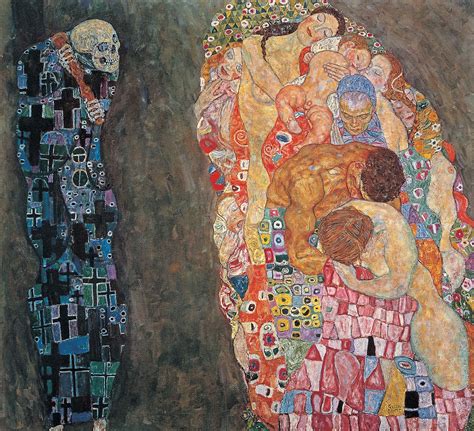
Figure 6. Gustav Klimt, Death and Life, 1908-1915, 180.8 x 200.6 cm, Leopold Museum, Vienna.
If Klimt represented the bodies of Philosophy vertically according to life course, Picasso arranged the bodies of Les Demoiselles in the round according to ethnicity. Two of the women don African masks, another pair appear as either Caucasian or Iberian, and one woman presents as Egyptian or Asian. The modern practice of categorizing and displaying others according to location-based stereotypes, was birthed in extractive and exploitive colonial networks. These networks enabled scientific hitchhiking, the siphoning of people and artifacts from abroad, and the subsequent reknitting of those distant people and artifacts together in European anthropology departments and sites of public display (such as museums, exhibitions, and accompanying guidebooks and photography reels). Through these ethnographic displays, imperial citizens came to know their empires. Indeed, not only did Picasso visit the Musée d’Ethnographie du Tracadéro in Paris in 1907, inspiring his African period from 1907-1909, but across from the bistro Closerie des Lilas (Picasso’s daily meeting spot with other poets, painters, writers, and philosophers) was the Jean-Baptiste Carpeaux fountain that displayed women from around the world (see figure 7).26 For Blier, Les Demoiselles should be read as partaking in this “global brothel” of ethnographic display.

Figure 7. Postcard depicting the Carpeaux Fountain, date unknown.
Less visible in the literature surrounding ethnographic display, however, are the statistical supports that sustained such practices. Accompanying these displays were a proliferation of statistical charts, graphs, and tables. At the ethnographic display included at the 1911 First International Hygiene Exhibition in Dresden, for example, statistical representations appeared far more than any other representational category.27 The 1900 World Fair in Paris, where Klimt’s Philosophy won gold, debuted the notable statistical visualizations of W.E.B. Du Bois (1868-1963) that depicted “data portraits” of race relations in the United States.28 Moreover, in both exhibitions and the mushrooming of publicly accessible print culture (such as association journals, health guidebooks, or scientific atlases), bodies on display from around the world were dissecte29d into statistically derived anatomical planes. Blier, for example, points to the enormous print run from 1898 until 1941 (with multiple editions in multiple languages, including French) of gynecologist Carl Heinreich Stratz’s (1858-1924) Die Rassenschönheit des Weibes (The Racial Beauty of Women): “filled with precise ‘measurable’ photographs of individuals in set poses would enable scientists to classify their sitters according to prescribed racial and ethnic categories.” In part, this “measurability” rested on statistically rendered “proportional” depictions of anatomy that translated curving, sinewy musculature into abstracted lines that allowed scientists to discern how statistically “true” a body was (see figure 8 for an example). Blier argues that Picasso encountered Stratz’s atlas, suggesting that the multi-perspectival portrayal of bodies in Les Demoiselles has to do with the layering of photography taken from different angles that was found in the atlases. I suggest instead that the angularity and mixed perspectives of the Les Demoiselles comportments resonate with the statistically rendered body found in such atlases, print culture, and exhibition sites. These types of multi-perspectival renderings reverberated beyond body knowledge to intersect with the kinds of relativity associated with the age of uncertainty, such as Albert Einstein’s theories of light and energy, Henri Poincaré’s maps, and the unfolding of quantum physics in the early decades of the twentieth century, each of which denied privilege to any singular perspective.30 Similarly, the women’s bodies in Les Demoiselles concede no single perspective; each anatomical angle was just as “true” as the next. As such, the painting revels in multiplicity. Thus, while art critic John Richardson has argued that the multi-perspectivity of Les Demoiselles exists due to the painting’s being “outside of time and place,” when viewed from the age of uncertainty, Les Demoiselles is intimately intertwined with the historical particularities of early twentieth-century European aesthetics, sciences, and traditions of truth-making.31

Figure 8. Carl Heinrich Stratz, Die Rassenschönheit des Weibes, 5th ed. (Verlag von Ferdinand Enke, 1904), 20.
Conclusion
Taken together, Philosophy and Les Demoiselles participate in the statistical aesthetics of the age of uncertainty. My argument is not that Klimt or Picasso explicitly deployed statistics in the crafting of these works, but rather that the age of uncertainty and its statistical styles of reasoning (and I would argue, seeing) offered new possibilities for describing the world. When viewed through the genres of symbolism and cubism, through the biographies of their creators, or even through their places of origin, Philosophy and Les Demoiselles have little in common. In contrast, viewing both as fellow conversants in the age of uncertainty invites further consideration about the entanglements between artistic and scientific visions and about the ways that the rise of statistics was not only an intervention in epistemology, logic, ethics, and metaphysics, but an intervention in aesthetics as well.
Notes
- The other two murals by Klimt included Medicine (1901) and Jurisprudence (1903). ↩︎
- Alberto e Pereda, “Science, art, society and Klimt’s University of Vienna Paintings,” eLife Science Publications 8 (2019): 1-5. ↩︎
- Carl E. Schorske, Fin-de-Siecle Vienna: Politics and Culture (1961, repr., Vintage Books, 1981), 232. ↩︎
- Schorske, 227-231. ↩︎
- Schorske, 239. ↩︎
- Daniel-Henry Kahnweiler, Der Weg zum Kubismus (Munich, 1915); in English as The Rise of Cubism (George Wittenborn, 1949), 6-7. ↩︎
- Enrique Mallén, Pablo Picasso: A Period of Transformation (Liverpool University Press, 2023), 59-61. ↩︎
- Mary Mathews Gedo, Looking at Art from the Inside Out: The Psychoiconographic Approach to Modern Art (Cambridge University Press, 1994), 134. ↩︎
- Roger Shattuck, The Banquet Years: The Origins of the Avant-Garde in France, 1885 to World War I (1955, repr. Vintage Press, 1968). ↩︎
- Stefanos Geroulanos and Todd Meyers, The Human Body in the Age of Catastrophe: Brittleness, Integration, Science and the Great War (University of Chicago Press, 2018). Also see Heather Perry, Recycling the Disabled: Army, Medicine, and Modernity in WWI Germany (Manchester University Press, 2014). ↩︎
- Some key texts include Meike Werner, Germany’s Other Modernism: The Jena Paradigm, 1900-1914 (Boydell and Brewer, 2023); Timothy Mitchell, Rule of Experts: Egypt, Techno-Politics, Modernity (University of California Press, 2002); David Frisby, Cityscapes of Modernity: Critical Explorations (Polity Press, 2001); Detlev Peukert, The Weimar Republic: The Crisis of Classical Modernity (Hill and Wang, 1993); Jonathan Crary, Techniques of the Observer: On Vision and Modernity in the Nineteenth Century (The MIT Press, 1992); Anson Rabinbach, The Human Motor: Energy, Fatigue, and the Origins of Modernity (Basic Books, 1990). ↩︎
- Ian Hacking, The Taming of Chance (Cambridge University Press, 1990). ↩︎
- Aya Homei, Science for Governing Japan’s Population (Cambridge University Press, 2023); Heinrich Hartmann, The Body Populace: Military Statistics and Demography in Europe before the First World War, trans. Ellen Yutzy Glebe (The MIT Press, 2019); Sarah Igo, The Averaged Americans: Surveys, Citizens, and the Making of a Mass Public (Harvard University Press, 2007); Georges Canguilhem, On the Normal and the Pathological,trans. Carolyn R. Fawcett (1966, reis., D. Reidel Publishing Company, 1978). ↩︎
- Hacking, The Taming of Chance. See also, Theodore M. Porter, Trust in Numbers: The Pursuit of Objectivity in Science and Public Life (Princeton University Press, 1995); M. Norton Wise, ed., The Values of Precision, (Princeton University Press, 1995); Theodore M. Porter, The Rise of Statistical Thinking, 1820-1900 (1986, repr., Princeton University Press, 1988). ↩︎
- Hacking, The Taming of Chance, 4 (emphasis original). ↩︎
- See, for example, Michael Friendly and Howard Wainer, A History of Data Visualization and Graphic Communication (Cambridge, MA: Harvard University Press, 2021); Miles A. Kimball and Charles Kostelnick, eds., Visible Numbers: Essays on the History of Statistical Graphics (London: Routledge, 2016); Edward Tufte, Visual Explanations: Images and Quantities, Evidence and Nature. (Cheshire, Connecticut: Graphic Press, 1997). ↩︎
- Schorske, 231; Deborah R. Coen, Vienna in the Age of Uncertainty: Science, Liberalism, and Private Life (Chicago University Press, 2007). ↩︎
- Alfred Barr, Picasso: Fifty Years of His Art (The Museum of Modern Art, 1946), 57. ↩︎
- Leo Steinberg, “The Philosophical Brothel,” October 44 (1988): 7-74; 39-40. ↩︎
- Suzanne Preston Blier, Picasso’s Demoiselles: The Untold Origins of a Modern Masterpiece (Duke University Press, 2019), 5. ↩︎
- Blier, 221. ↩︎
- Lorraine Daston and Peter Galison, Objectivity (Zone Books, 2007); Donna Haraway, “Situated Knowledges: The Science Question in Feminism and the Privilege of Partial Perspective,” Feminist Studies 14, no. 3 (1988): 575-599. ↩︎
- Christian M. Nebehay, Gustav Klimt: Dokumentation (Vienna, 1969), 208. ↩︎
- Sarah Rose, No Right to Be Idle: The Invention of Disability, 1840s-1930s (University of North Carolina Press, 2017); Coreen McGuire, “Relational Disability and Invisible Illness in Industrial Britain” Osiris 39, Special Issue: (2024): 169-184. ↩︎
- Anson Rabinbach, “Social Knowledge, Social Risk, and the Politics of Accidents in Germany and France,” in States, Social Knowledge, and the Origins of Modern Social Policies, eds. Anson Rabinbach, Dietrich Rueschemeyer, Theda Skopol (Princeton University Press, 2017): 48-89. ↩︎
- Blier, 227. ↩︎
- “Die deutsche Städtestatistik auf der Internationalen Hygiene-Ausstellung,” Hygieia: sozialhygienische Korrespondenz, Herausgegeben von dem Nachrichten-Bureau der Internationalen Hygiene-Ausstellung Dresden 1911, no. 21 (February 1911). ↩︎
- Whitney Battle-Baptiste and Britt Rusert, eds, W.E.B. du Bois’s Data Portraits: Visualizing Black America, The Color Line at the Turn of the Twentieth Century (Princeton Architectural Press, 2018). ↩︎
- Blier, 187. ↩︎
- Peter Galison, Einstein’s Clocks, Poincaré’s Maps: Empires of Time (W.W. Norton, 2003); Paul Forman, “Weimar Culture, Causality, and Quantum Theory, 1918—1927: Adaption by German Physicists and Mathematicians to a hostile Intellectual Environment,” Historical Studies in the Physical Sciences 3 (1971). ↩︎
- John Richardson, A Life of Picasso. Volume II: The Painter of Modern Life, 1907-1917 (Random House, 1996), 56. ↩︎
About the author
I am a postdoctoral fellow at the Institute for History at Leiden University (b.m.wesolowski@hum.leidenuniv.nl) where I am currently working on the project entitled “Human Development and Its Outliers.” My research interests include histories of knowledge production, visual and material culture, disability and aging studies, modern German history, and histories of postwar internationalism and human rights. I am also the author of Through the Eyes of Dresden: Art, Science, and Bodies on Display in the Early Twentieth Century (link),publishing this October with De Gruyter.
Edited by Bianca Angelien Claveria and Marieke Gelderblom.